Career & Pathways Curriculum 2025/2026
At West Kirby School, we encourage our pupils to explore as many real-world career opportunities as possible while they are with us. Our Careers and Preparation for Adulthood programme is an important part of our curriculum, designed to give pupils the knowledge and experience they need to make confident, well-informed decisions about their future and the next steps in their career journey.
We are committed to delivering a full Careers Programme that meets the Government’s 2018 Careers Strategy. We work to meet all the Gatsby Benchmarks and follow the Careers Development Institute Framework for Careers, Employer and Enterprise Education. Careers Education, Information, Advice and Guidance (CEIAG) plays a central role across the school and is embedded in every curriculum area.
All pupils have weekly Preparation for Adulthood lessons throughout the year, covering the knowledge and skills they need for school and life beyond us. Our aim is to support pupils’ wellbeing while helping them achieve their potential. By providing guidance, positive signposting and opportunities to explore careers, we inspire pupils to set goals, develop skills and build confidence in their future choices. The success of our programme can be seen not just in the destinations our pupils reach, but in the motivation, engagement and excitement they bring to their learning and career planning.
Below is our Careers Programme, which is embedded into our Preparation for Adulthood curriculum. This is reviewed in July 2026. The impact of our curriculum is assessed through feedback from pupils, parents and professionals.
Year 7 – Introduction to the World of Work
In Year 7, our pupils begin their career education by exploring the world of work and developing a clear understanding of the skills and qualities that employers value. This early introduction helps students to broaden their horizons, challenge stereotypes and start thinking positively about their future pathways in an age-appropriate way.
Understanding Different Types of Jobs
During the first half of the programme, our Year 7s will learn about job families and employment sectors, such as healthcare, technology and the creative industries. They explore a range of different roles within these sectors and begin to understand how jobs link together and contribute to society.
They will investigate how people enter different careers, including routes through further education, apprenticeships and training. This helps them to see that there are multiple pathways to success and that future choices can be flexible and personal.
As part of this learning, students complete a short career research project based on a job that interests them. They learn how to find information about job roles, skills and qualifications, and practise presenting their findings clearly.
Introduction to Employability Skills
In the second half of the programme, the focus shifts to employability skills – the transferable skills that are important in all workplaces. Pupils learn what employability skills are, why they matter and how they are used in real jobs. Key skills explored include communication, teamwork and problem-solving.
To support self-awareness and personal development, pupils will use the UNIFROG careers platform to complete a guided skills self-assessment. This helps them to identify their strengths and begin thinking about areas they would like to develop as they move through school.
Impact
By the end of Year 7, pupils will:
- Have a basic understanding of different job sectors and roles
- Recognise that there are many routes into careers
- Understand the importance of employability skills
- Begin developing self-awareness about their own skills and interests
This programme lays strong foundations for future career learning and supports students to make informed choices as they progress through school.
Year 8 - Developing Employability and Interpersonal Skills
In Year 8, careers education builds on the foundations established in Year 7 by focusing more closely on what employers are looking for and how pupils can begin to recognise and develop their own employability skills. The programme encourages pupils to make links between school, skills and the workplace, supporting growing self-awareness and confidence.
Understanding Employer Expectations
At the start of the programme, pupils explore real job descriptions and person specifications to understand how employers advertise roles and identify suitable candidates. They learn how to spot the skills, qualities and attributes employers value and begin to reflect on how their own skills match these expectations.
Year 8 pupils are introduced to the difference between ‘hard’ (technical) skills and ‘soft’ (interpersonal) skills. This helps them understand that while qualifications and technical knowledge are important, personal qualities such as communication and teamwork are equally valued across many careers.
Developing Interpersonal and Communication Skills
A key focus of the Year 8 curriculum is the development of effective communication skills. Pupils learn about verbal and non-verbal communication, body language and active listening and explore how these skills are used in everyday workplace situations.
Through practical activities and role-play, pupils have the opportunity to practise communicating clearly, listening to others and giving constructive feedback. These sessions help pupils build confidence and understand how strong communication supports positive working relationships.
Teamwork and Personal Reflection
Pupils also explore the importance of teamwork and learn about the different roles people can take within a team. They reflect on their own strengths and preferences when working with others and consider how effective teamwork contributes to success in the workplace.
To support personal development, pupils complete a self-assessment on the UNIFROG careers platform, focusing on teamwork and interpersonal skills. This enables them to identify strengths and set simple, achievable targets for improvement.
Impact
By the end of Year 8, pupils will:
- Understand how employers identify skills and qualities
- Be able to distinguish between hard and soft skills
- Have developed confidence in communication and teamwork
- Show increased self-awareness through reflection and target setting
This programme helps pupils make clearer links between their learning, their skills and future careers, preparing them for more in-depth career exploration in later years.
Year 9 - Rights, Responsibilities and Digital Awareness
In Year 9, the focus of careers education shifts towards understanding the real responsibilities of working life and the importance of maintaining a professional online presence. Pupils are encouraged to think more critically about how behaviour, both in and out of school, can impact future opportunities.
Understanding Rights and Responsibilities at Work
Pupils begin by learning about employee rights, including fair pay, safe working conditions and legal protections in the workplace. This helps them understand how the law supports employees and why these rights are important.
They then explore employee responsibilities, such as punctuality, following workplace policies and behaving professionally. Pupils consider how these responsibilities support the smooth running of a business and contribute to a positive working environment.
To apply their learning, pupils analyse workplace case studies, identifying relevant rights and responsibilities and suggesting appropriate ways to resolve workplace issues. This develops their problem-solving skills and understanding of real-life workplace situations.
Managing a Digital Footprint
A key focus in Year 9 is helping pupils understand their digital footprint and how online activity can affect future education and employment opportunities. Pupils learn what a digital footprint is and carry out a guided audit of their own online presence.
They also explore how employers may use social media during recruitment, discussing both the positive and negative impact an online profile can have. Pupils are encouraged to think carefully about how to present themselves online and how to maintain a safe, responsible and professional digital identity.
Reflection and Personal Development
To support reflection and personal growth, pupils complete a self-assessment activity on the UNIFROG careers platform. This allows them to review what they have learnt, reflect on their attitudes and behaviours and identify key learning points to take forward.
Impact
By the end of Year 9, pupils will:
- Understand their basic rights and responsibilities in the workplace
- Be able to apply this knowledge to realistic workplace scenarios.
- Recognise the importance of a positive digital footprint.
- Show increased awareness of how online behaviour can affect future opportunities.
This programme supports pupils in becoming responsible, informed and digitally aware individuals, preparing them for more focused career learning and decision-making in the years ahead.
Year 10 - Career Planning and Workplace Safety
In Year 10, pupils focus on preparing for their future careers by exploring a range of options and understanding the fundamentals of workplace safety. This programme helps pupils make informed choices about post-16 pathways while developing awareness of health, safety, and professional responsibilities.
Career Planning
Pupils begin the programme by reflecting on their personal strengths, interests and aspirations. They learn to set initial long-term career goals and explore how their skills and interests connect to different job families and industries.
They then investigate a variety of post-16 pathways, including academic routes such as A-levels and vocational options like apprenticeships. Pupils research specific careers, identify required qualifications and consider pathways that align with their career goals.
The programme also introduces pupils to Labour Market Information (LMI), helping them understand local and national employment trends. Pupils learn how knowledge of growing industries and future job opportunities can guide their career planning decisions.
Workplace Health and Safety
A key focus in Year 10 is understanding health and safety in the workplace. Pupils learn about the rights and responsibilities of both employees and employers, including the importance of following health and safety rules to create a safe working environment.
They also develop skills in identifying hazards and managing risks, applying risk assessment principles to realistic workplace scenarios. This ensures pupils are aware of potential dangers and understand simple strategies to maintain safety at work.
Reflection and Personal Development
Pupils consolidate their learning through a self-assessment on the UNIFROG platform, focusing on teamwork, interpersonal skills and personal development. They identify their strengths and set targets to further develop their skills and employability.
Impact
By the end of Year 10, pupils will:
- Have reflected on their interests, skills, and career aspirations
- Understand the variety of post-16 pathways and requirements for different careers
- Recognise the importance of health and safety, including employer and employee responsibilities
- Be able to identify and manage workplace risks
- Show increased self-awareness and goal-setting skills through UNIFROG reflection
This programme equips our pupils with the knowledge, skills and awareness needed to make informed career choices and prepare safely and responsibly for the workplace.
Year 11 - Preparing for Post-GCSE Pathways
In Year 11, pupils focus on the practical skills needed for their next steps after GCSEs, whether that is college, sixth form, apprenticeships or employment. The programme helps pupils to prepare applications, develop interview techniques and reflect on their strengths and skills.
CVs and Personal Statements
Pupils begin by learning about Curriculum Vitae (CV) writing, including the purpose of a CV, key sections, and the difference between chronological and skills-based formats. They then draft their own CVs, focusing on clear presentation, positive language and accurately recording their education, experience and achievements.
The programme continues with personal statements, where pupils learn how to plan, structure and draft content for college or sixth form applications. Pupils practise proofreading, editing, and receiving feedback to ensure their statements are professional, clear and reflective of their skills and ambitions.
Job Interviews
Pupils also prepare for job and college interviews, learning how to research organisations, anticipate common questions and structure answers using techniques such as the STAR method. Through mock interviews, pupils practise both verbal and non-verbal communication, including body language, confidence and asking thoughtful questions, building skills that are essential for future success.
Reflection and Personal Development
As with previous years, pupils complete a self-assessment on the UNIFROG careers platform, reviewing teamwork and interpersonal skills. This activity helps pupils identify strengths, reflect on areas for development and set personal targets to support their transition to post-16 education or employment.
Impact
By the end of Year 11, pupils will:
- Have prepared a professional CV and personal statement
- Be confident in interview techniques and communication skills
- Understand how to present themselves positively to employers and educational providers
- Be able to reflect on strengths and set personal development goals
This programme ensures that pupils leave Year 11 career-ready, confident and well-equipped for the next stage of their education or employment.
Post 16 - Pathways to Adulthood - Employability Skills
Our Pathway to Adulthood programme helps our young adults to develop the skills they need for work, further learning and independent adult life. Learners work towards City & Guilds Employability Skills qualifications, building skills from Entry Level through to working towards Level 2.
The course supports learners to become more confident, independent and work-ready, with a strong focus on real-life skills.
Post 16 pupils will learn:
Career planning and next steps – Pupils explore different career options and training routes, helping them choose a pathway that matches their interests, strengths and goals. They learn how to look for job vacancies, courses and training programmes and make informed choices about their future.
Applying for jobs, courses and training – Pupils learn how to complete application forms, understand how employers select candidates and prepare the documents needed to apply, including writing a CV.
Understanding their own skills and strengths – Learner identify their skills, qualities and achievements and learn how to present these positively to employers or training providers.
Positive behaviour for work and learning - The programme helps learners develop the attitudes needed for employment, including motivation, professionalism, reliability, flexibility and teamwork. Pupils reflect on their behaviour and build confidence and independence.
Communication skills - Pupils practise effective communication, including face-to-face, written and digital communication. They also learn about appropriate use of social media and workplace communication.
Working safely and effectively
Pupils develop practical skills such as planning their day, meeting deadlines, working safely, managing tasks and improving how they work.
Outcomes
By the end of the programme, learners are better prepared to:
- Move into employment or supported employment
- Progress to further education, training or apprenticeships
- Live more independently and confidently
The course focusses on real progress, personal development and readiness for adult life, as well as recognised qualifications.
Encounters with Further and Higher Education Settings
For our pupils, college visits are an important first step in exploring post-16 pathways. Each Autumn term, we host a Meet the College and Training Provider event for Year 6 through Post-16 students—this year welcoming six local colleges and training providers, to give pupils a broad introduction to available next destination options. We were supported by:
- The City of Liverpool College
- Cheshire South and West College
- Aspris College
- Steven Gerard Academy
- The Learning Foundry
- SWRAC
Pupils in Years 10, 11 and Post-16 have the opportunity to attend at least one college visit per year. For Year 11 and Post-16 pupils considering leaving school, we arrange individual or small group visits to provide a more in-depth insight into specific colleges that offer courses that match their aspirations and can meet their needs. We have visited or are planning visits in the New Year with the following further education colleges and higher education settings:
- Wirral Metropolitan College
- Petty Pool College
- Myerscough College
- Coleg Cambria
- Hugh Baird College
- TTE Ltd
- The Engineering College
- Hope University
We work closely with local colleges, who are highly supportive in facilitating visits, taster sessions and guidance for our pupils.
Encounters with Employers & Work Places:
Work Experience:
We aim to give our pupils high quality, meaningful work experience as part of their careers education. This means that throughout their time at West Kirby School and College, pupils should have multiple opportunities to visit real workplaces, meet professionals and try out different types of work. Our work experience programme
Our Year 11 pupils participate in a dedicated week of external work experience in July after their GCSE examinations. Throughout Post-16, we aim to offer additional opportunities throughout the academic year and a full week of work experience in July.
When external placements are not possible or our pupil is not confident enough at the time, tailored in-house experiences ensure every student engages with the world of work and develops valuable skills for the future. This has taken place at our The School Bakery, our school kitchen and with our maintenance team.
These experiences help our pupils understand the world of work, explore career options and develop important skills for the future. Schools are expected to make sure these opportunities are well planned and suited to each pupil’s needs, helping them feel prepared and confident for life after school.
Career Talks & Speakers:
Pupils from Year 9 to Post-16 hear from local employers and professionals, gaining insight into careers, industries, employer expectations and workplace life to help them plan for the future. During the Autumn term, we had the pleasure of visits from the CEO of Copeland Securities and visited Gladstone Library.
In the Spring & Summer terms, we have confirmed the following employer talks:
- Claire House
- Jackson Cat Café & WildLife Rescue
- School Observatory
We will be inviting other employees in after the GCSE examinations., watch this space!
Career Fairs:
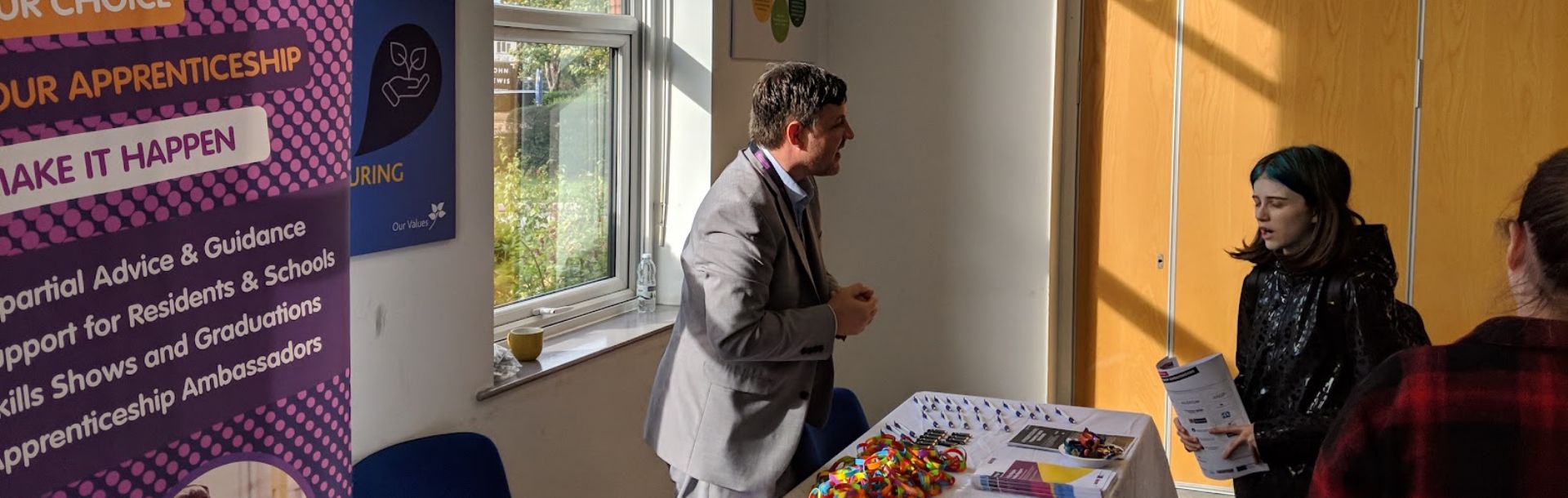
From Year 6 through Post-16, we’re committed to supporting students as they explore their future career paths. Attend our in-house career fair. From Year 11 to Post 16, we give them the opportunity to attend The Wirral Career at The HIVE and The National Apprenticeship Exhibition, which is being hosted at Aintree Race Course at the end of January 2026.
This gives our pupils the opportunity to meet industry professionals, discover a wide range of opportunities and get guidance on apprenticeships, vocational pathways and further education. Whether our pupils are starting to think about their future or ready to take the next step, these events are the perfect place to gain insight, ask questions and plan their journey.
Work Shadowing:
In Post-16, we ask local employers for opportunities for our pupils to work shadowing their employees. Whilst we are in the process of growing this programme, this provides our pupils with a real-world glimpse into a day in the life of a specific role or job sector. By spending time with professionals in the workplace, pupils can observe day-to-day roles, ask questions and gain valuable insight into industries that interest them. Work shadowing helps pupils make informed decisions about their future pathways, build confidence, and develop essential skills for the world of work.
Linking Curriculum to Careers
We ensure that learning in every subject connects to the world of work, helping students understand how their studies can lead to future career opportunities.
By embedding careers awareness and real-world applications into the curriculum, pupils develop both subject knowledge and transferable skills, gaining insight into how different industries use the skills they are learning.
This approach empowers pupils to make informed choices about further education, training and career pathways.